
X-MEN was a comic book series that was published in 1963, It was created by Writer: Stan Lee and Artist Jack Kirby.
The concept for the team came about when Stan, trying to come up with ideas with another Super Hero Team was thinking up a unique origin story for their powers.
“I wanted to do a new team of heroes and I said to myself, “I’ve run out of radioactivity and gamma rays and cosmic rays – what excuse can I find for these guys getting super powers?”
“I took the cowardly way out and said, “Wait a minute, what if they were just mutants? What if they were just born that way? Everybody knows there are mutations in real life. There are frogs that are born with five legs and so forth. I can get these guys to have any power I want. I’ll just say, “Well, they’re mutants. They were born that way.” Nobody can argue with that!”
“As with all superhero teams, I had to have an excuse for putting them together,” Lee recalled in Wizard: X-Men Turn Thirty. “The Fantastic Four were essentially a family, the Avengers were a club. What could the X-Men be that would be different? (…) I figured if they’re teenagers, what’s more natural than a school?” - Stand Lee. [Comic Creators on X-MEN, Tom DeFalco, April 2006]
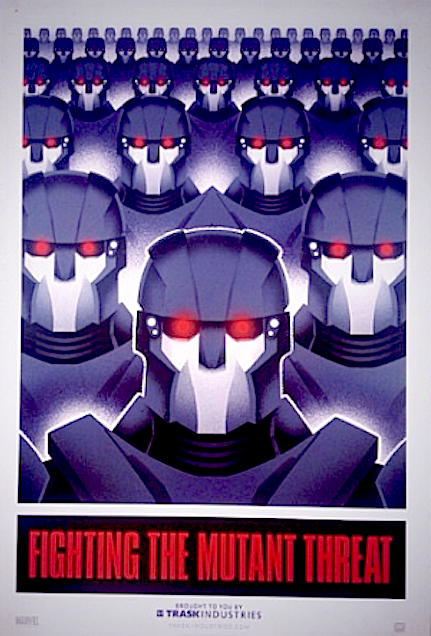
http://www.aintitcool.com/node/63314
As the main cast were born with their super powers through natural human evolution or 'mutation', the comic got it's main story focus through Man kinds rejection and hatred of them, even as they protected humans from other mutants and themselves.
“With the Fantastic Four and the Avengers, you had groups of heroes that everyone liked. Nobody felt hostile to them. When I started out with Spider-Man, the police were against him and people were afraid of him. I wanted a team of superheroes that were treated like Spider-Man. Instead of being lauded by the public, they’d be feared and hated and hounded and shunned. (…) The more good things the X-Men did, the more the public hated them. I thought that was an interesting concept.”
“The whole
underlying message of the X-Men was about “love thy fellow man”. He may
have wings growing out of his back or beams shooting out of his eyes, or
he may be a different colour or different race, but he’s still your
brother. It’s wrong to hate or persecute people just because they look
or act different than you, or because they worship differently than you
do.” - Stand Lee. [Comic Creators on X-MEN, Tom DeFalco, April 2006]
This allowed the X-MEN to appeal larger audience who had troubles with a white, male, modern society and were considered outcasts of the era. Even if most of the cast were white (oops), It was not until the release of Giant-Size X-MEN Issue number one, published by Marvel comics in 1975, Written by Len Wein and Illustrated by Dace Cockrum. Which not only introduced everyone's favorite Canadian Super Soldier Wolverine into the Marvel franchise for the first time.
But also gave us, Piotr Rasputin/Colossus the Russian iron giant, Kurt Wagner/Nightcrawler the German Teleporting devil.
And Ororo Munroe/Storm African American Weather Witch, also the love child of The Black Cat and Typhoon. (No, Really)
With this we had a more racially diverse class of heroes who would go onto form the X-MEN team we know today.

But that's enough about a brief history into the X-MEN as a comic format, how well do the transfer into the video game world?
Nintendo Entertainment System (NES) 1983-2003 (retail availability)

Only two games were made for Nintendo Entertainment System using the X-MEN franchise and sadly both of them were made by LJN Toys, any one who is familiar with the ANGRYVIDEOGAMENERD, will very much know who LJN are. if you aren't then I'd be happy to inform you that they were responsible for creating a HORDE of terrible video games the NES/SNES and Gameboy, it's none the different with these two games.
One bit of interesting information to note is that Jack Friedman founder of THQ, was bought into the company by LJN's Founder Norman.J.Lewis in 1970, at the time Jack had not Founded THQ or Jakks Pacific, but would later go onto do so. We'll talk more about THQ when we get round to talking about Darksiders.
Uncanny X-MEN/Marvel's X-MEN by LJN. (1989)

LJN's X-MEN was a top down linear fighting game(?), It's a bit hard to describe what this game is, because from what I've seen, this game is a complete mess.
Game Play-
In terms of Game play it's simple, there are two types of characters, long ranged and melee, with six characters to choose from. Each character has their only little stats that make them slightly different from one another, but in the grand scheme of things, they aren't that different from one another, so it's pick your poison.
The game constantly has two characters on screen at the same time, which has been incorporated to allow multilayer factor, BUT! If you are playing single player it breaks the game, as the AI for the second character is terrible, it will wonder aimlessly with a 'vague' idea of what it's exactly meant to be doing, but other than that it just gets in the way and prevents you from carrying on, to quote the AVGN.
"Then as soon as possible you let the computer get killed, yes, the sooner that worthless bitch bites the dust the sooner you can be free."
Visuals-Videos games are a visual medium, very much like comic books, they use sounds, visuals, story and interactivity to get us invested, have fun and enjoy them. And you don't always need 'good' visuals to make a good game, very much a comic. But what you do need is 'clear' visuals, you need to be able to clearly tell the person in front of what is happening... and well.

Well I can clearly tell there's the colour red in there, but I'm not exactly sure 'where' you are mean to be in this scenarios, or what are walls or floors. Also if you couldn't tell, the two...men? On the screen are meant to be Nightcrawler and Wolverine, but it's okay if you didn't know at first.

Because all the characters look exactly the same, only slightly recolored. As for the enemies the general ones aren't really anything, just random shapes that move across the screen and attack you, or if you are smart enough, used to kill the computer character. But from watching a walk-through of the game, there is no need to even fight the enemy characters, or 'bosses' you can cruise pretty much through all the levels without touching anyone.
Story-
Now you may recall I said 'bosses' well while they weren't mentioned in AVGN's review, I certainly did see them in A & C Video Game's Walk through, for they were the only enemies that looked human and you didn't need to fight them. But apparently the objective of the game was to defeat Magneto and his Evil mutants, despite the game never previously before stating that's what you were doing...NEXT GAME!
AVGN X-MEN GAMES VIDEO
A&C Video Game's X-MEN NES SPEED RUN
Wolverine by LJN. 1991
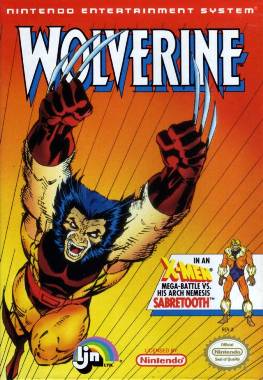
Game Play-
The gameplay this time round is a lot more varied, you can jump, punch/kick, swim and all that good stuff. But if you want to use Wolverine's Adamantium Claws, then you'll need to press the select button to do so, but then every time you use them, you loose some of your life, but you kill an enemy in one hit. But then again, why bother using them at all then?
Another, questionable feature is the removable of the grace period of invulnerability, you know, those few seconds you get after being hurt? In this game, that does not exist, so if you touch an enemy, get attacked or are harmed, you can keep being harmed until your life is depleted. You can regain health by eating burgers and 'soft drinks' (yay, Kid friendly). The game has been credited as being incredibly hard to beat, but from personal experience, incredibly hard to beat does not always lead to a satisfying ending.
Visuals-
Visual wise it's not bad, Wolverine looks like Wolverine and the background is contrasted enough in stages so you can see him as well as platforms being coloured enough so you can see them. It's just, not all that impressive or really SCREAMS X-MEN!, feel a lot more like generic plat former number 0987.
As for the enemies, OH BOY!, We have 100's of Silver Surfers, well I assume they are actually robots, but if you are playing a MARVEL game, you'll probably just jump straight to Silver Surfer, we all have random thugs, Frankenstein monsters robot things? And reapers? Now, me listing those off you'd think, "Well they are just creating varied diffrent levels of challenge, like a classic 8-bit game" NOPE! Wait til you hear the story.
Story-
Magneto and Sabretooth have kidnapped you and taken you to a deserted island. First off, deserted means there is no one there! A thirdly, why is the grim reaper and robo-frankienstien on a deserted island?
Coin Slot Arcade Console (Arcade) 1970's - present

X-MEN by Konami (1992)
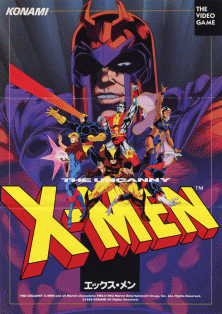 Ported to
 -Xbox Live Arcade and PSN by Backbone Entertainment (2010)
-iOS and Android by DotEmu (2011)
The Game is a beat'um up side scroller featuring a large rooster of X-MEN characters, both playable and non playable. For the player you can play as...
Cyclops, Colossus, Wolverine, Storm, Nightcrawler and Dazzler. And with the option to play from up to six players, no character can be left out.
As for non Playable ones, besides the Obvious Mangeto and Professor X, you've also go, Kitty Pryde, Pyro, Blob, Wendigo, Nimrod, The White Queen, Knight's of the hell fire club, Juggernaut, The living Monolith, Mystique, Reavers and even Sentienls. With all this Nerdy goodness, is it actually good? Or is it just pandering to the fans?
Game Play-
The game be controlled rather easily using the joystick to move left and right along the screen as well as up and down to add a sense of depth and dimension to the game. As for buttons, the players are given three, Jump, Attack and Mutant Power, the mutant power, when used will hit multiple foes on the screen, but with also drain the players of their health, if the players drop below four bars of health they can no longer use their Mutant power. Additional mutant powers can be gained by defeating a level boss.
The Main objective for players is to reach the end of the levels by fighting off Magneto and his Minions.
Visuals-
The game looks great, using the signature looks of the characters helps tell them apart from the rest of background as well as letting them pop and stand out to players. As well does the enemies, it's impossible to not get confused who you fighting on the screen as there is enough different enemy types and colours to make them look visually identifiable. The levels are also well crafted, each bit of location is uniquely different, so you don't feel like your watching the background loop aimlessly or that it's useless padding.
X-MEN (Arcade) - Full Game Video
X-MEN: Children Of The Atom by Capcom (1994)
 Ported to
 -Sega Saturn by Rutubo Games (1995)
-PC & Playstation by Probe Entertainment (1997 & 1998)
Using the rise of the X-MEN:Animated series, X-MEN:Children Of The Atom is not just a typical X-MEN fighting game, but it's also the the foundation to the Marvel Vs. Capcom series.
Inquiring the actual licenses from Marvel to use their character, Capcom have gone really far in this game to take from the success of the recent (at the time) Animated TV series, so much they use the animated series current outfit choice as well as the voice actors from the show to reprise their roles as the characters. That's some serious dedication.
Game play-
The game has a very familiar feel to previous fighting games that had come before it, such as Capcom's Street Fighter II & Darkstalkers, But instead of a Super Combo Gauge/Speci Gauge, the player has a X-Power gauge. The X-Power Gauge will build from Lv.1-Lv.2- MAX Level as the player preforms regular or special moves, when gauge hit's Lv.2 half an aura will appear around the player's character which will become completely viable once they hit Max Level, this can allow the player to perform a X-ability which will deplete a small portion of the gauge or a Hyper-X Ability which will deplete a larger portion of the gauge, the gauge can also be depleted when the player attempts to break a fall when thrown or performing a counter throw.
Other features that were unique to the game at the time were. Super Jumpers, the ability to roll away or towards an opponent after being throw and the ability to continue performing combos after throwing your opponent. You can also direct abilities, i.e. in this case, directing Cyclops's Optic blasts. For the First time the player could also just if they'd wish to block manually or automatically, if they chose automatic, then aspects of the game would be restricted due to the automatic functions set in play.
Unlike previous single player games, the characters do NOT face a clone of themselves and as for single player mode, the game features six CPU controlled enemies two of which are non playable boss characters And if the requirements are met, you can fight Street Fighter's Akuma as the six fight.
Making Akuma Appear (Youtube)
Visuals-
.gif)
Coming from the company that brought you some of the greatest Arcade games of all time, you can imagine the spited graphics of this reconcilable Marvel heroes. Each character has their own pose, their own stance, attacks, each one of them, like most Capcom games are hand crafted to give their own feel, look and design.
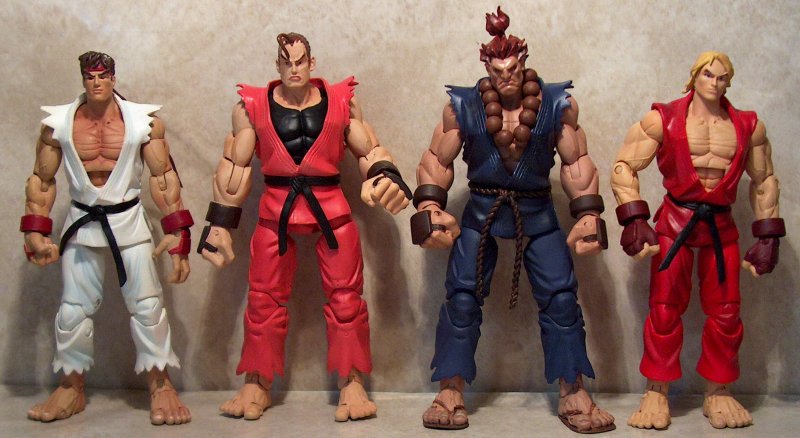
THEY DON'T COUNT!
But each character does feel unique in their own right, with their animations contributing to their feel, such as their weight, their strength and how much health they have. Even the level are designed to break apart so you can crash through to other sections of the level, making it feel bigger than it is.
This smashing through to other sections of a map is trait that will carry on to many other fighting games after this.
Story-
Magneto is planning on letting loose an electromagnetic pulse that will send the world into the dark ages, allow the more super powered mutants to remain the dominant species of the planet.
Marvel Super Heroes By Capcom (1995)

-Sega Saturn (1997)
-Playstation (1997)
-XBLA/PSN (2012)
Released the following year to X-MEN:Children of the Atom, Marvel Super Heroes is another arcade fighting game that allows players to take control of Marvel Heroes and Villain's from the franchise and fit them against one another.
The game features Six Heroes and Four villains for the start of the game, but players will be able to unlock two more additional Boss Villains as well as a secret Character brought other from a different Capcom franchise.
Game play-
For the most part, the game play isn't that far different from Children of the ATOM, but there are enough minor changes to make it it's own unique gaming experience, for example. By finishing fights or meeting the games criteria you can earn 'Infinity Gems' which allow you to mix up the game play in a match, such as producing a Doppelganger of Spider Man when he uses a Power gem, there are several types of gems in the game, A Power, Time, Space, Reality, Soul and Mind Gems. That each mix up the game uniquely depending on the character.
Visuals-

Marvel Super Heroes Spider-Man Playthrough
X-MEN VS. STREET FIGHTER By Capcom (1996)

Ported to
-Sega Saturn (1997)
-Playstation (1998)
X-MEN VS. Street Fighter was the third Capcom fighting game to feature Marvel characters at the time, it was also the first to pitch them against other characters in Capcom's Fighting franchise. It was also the first fighting game under Capcom's belt to mix Street Fighter game mechanics with tag teaming.
Game Play-
X-MEN Vs. Street Fighter is the first Capcom game that builds on the street fighter fighting mechanic by using a purely tag team based style, unlike previous games that used a two out of three battles to determine the winner, players must defeat BOTH characters in their opponents tag team, or have the most health before the time runs out.
You can only play as one characters at a time, but the secondary character can assist in combat if you press either the Hard Punch or Kick buttons, which will activate a variable attack, which will allow the secondary character attack and then taunt, while taunting the opponent may be able to attack the secondary character and influence damage on them, they will be able to restore their health while their partner is fighting, but if they are defeated, so they will take the place as the current fighting character. So strategy wise, it's best to get as many hits on them before you have to actually fight them.
Plays can also bring their partner into battle by performing this games version of super and hyper moves, which take up some of the vitality bar, but when used, the characters will switch in-terms of which is in play.
The player will have to face their own team mate at the end of the story mode, and who ever wins, it will play that characters ending.
Visuals-
The games visuals go largely unchained from previous pixelated fighting games before it, the biggest change to it, would be the fact that the Street Fighters Energy based Attacks are made bigger, to make them see on par with the marvel heroes.
Marvel Super Heroes Vs. Street Fighter By Capcom (1997)

Ported to
-Sega Saturn (1998)
-Play Station (1999)
The sequel to X-Men Vs. Street fighter, the game replaced most of the X-MEN cast with Marvel heroes and Villains, fixing problems that were in the previous game, other than that, it's more or less the same game as before.
Gameplay-Unlike X-Men Vs. Street Fighter, a player can summon their partner character to preform a special move and this will not swap out the characters.
Instead of fighting your partner to achieve the character ending you want, both character must instead fight Cyborg-Akuma, and who ever deals the finishing blow gets their ending.
Visuals-
Visually the game is exactly the same, besides a few palette swaps with reused backgrounds. Other than that, Marvel and Street Fighter characters are taken straight from previous Marvel and street fighter, fighting games, only with a few new animations and tweaks for the game.
Marvel Vs. Capcom: Clash Of Super Heroes by Capcom(199)

Ported to
-Dreamcast (1999)
-Play Station (1999/2000)
-XBLA/PSN (2012)
The first game that started Capcom's most highly anticipated fighting game franchises, with an ever growing roster of both Marvel and Capcom character through the ever growing ages.
Gameplay-
Unlike previous tag team fighting games by Capcom, intead of the secondary/partner character being another you choose from after choosing your primary, you instead are given an assist character at random. The assist character can be summoned a limited amount of times during to fight to aid you. If the players knows the code, they can make them system choose a certain assist character, rather than a randomly chosen one.
When a assist character is summoned, it is known as a duo team attack, which will allow the player to control for a brief amount of time, during this time the characters have unlimited use of their super moves.
Due to the fact that duo team super attacks are hard to avoid even and do sustainable damage, even if blocked, many players opt to try and start with them, before the players have a chance to attack.
Visual-
Sadly, once more the visuals go unchanged from previous games, mostly cause it's easier to recycle pre-made sprites then it is actually to remake them entirely. BUT! The game does offer many unseen characters in this sprite format, such as Mega-man, Venom and so forth.
Unlockables-
With the exception of Roll, most of the characters are just recolours of previously seen characters. Even lilith a already established character in the Darksiders universe. the in game explanation for her Morrigan like appearance is that they are sharing the same body.
Marvel Vs. Capcom 2: New Age Of Heroes by Capcom(2000)

-Dreamcast (2000)
-PSN/XLA (2009)
-iOS (2012)
Marvel Vs. Capcom 2 is the sixth volume in the Marvel & Capcom video game franchise, unlike previous games before it, M&C: 2 is the first to have only ONE character ending, as well as central character plot. The game even made it's own character specially for the game, who acts as the games main protagonist, despite playing as them not being mandatory.
There were four new characters developed for the game, the main one whom the game focuses on is: Ruby Heart, besides the odd cameo she has not appeared as a playable character in a Marvel Vs.Capcom Game, how ever, she will probably be reappearing in her OWN game Dai Koukai Frontier which is set to release in 2014. The boss character, Abyss, who was also developed purely for M&C: 2 is the only character to no reapear in cameos or other games and is so far the only boss in a M&C franchise fighting game, whom is not playable.
The other two characters made purely for this game were Sonson the III & Amingo.
Sonson the III was actually the daughter of a previous Capcom character, so it is debatable if she is a Marvel Vs. Capcom character, which is where she first appeared, or a Sonson character, as her 'grandfather', comes from that line of gaming. Unlike Ruby it is unknown if she will appear in a game outside the Marvel Vs. Capcom franchise.
Unlike the other two playable characters, Amingo has no ties to Capcom games, past or future, it is rumored that he was meant to have his own game, but that was canceled. His only other known appearance is his mugshot in the sequel Marvel Vs. Capcom game.
Gameplay-
With this game they wanted to simply the 'at the time' arcade controls to make the game more approachable with new players. To do this they trimmed down the controls by having four main buttons and two assist, as well as tweaking the air combos. As well as the game would be 3 on 3 tag team, rather than two on two like the previous game. This style of 3 on 3 would continue on to the sequel.
While the games are 3 on 3, with players choosing three characters from the roster in the character select screen, rather than having assist characters, you can only play one on one at a time. Winning a match when either all the characters are defeated or you have the most health out of the combination of characters when the time runs out. In previous games there would be three punching/kicking buttons, but to make easier for players, they have replaced the third punch/kick button with an assist button which allows players to summon their other character to preform super moves.
While the assisting characters are out, they can be harmed and even K.O'D by the opponent, pressing the assist button in combination with the regular ones can allow you to preform super and super combos with your characters. When you or an assist character preform a super move, it will deplete one level from your super bar, which consists of five levels, this bar is shared between all members of your team.
The only time you can not call an assist character is when you are performing a super move, super jumping or blocking.
In the game, characters have the ability to knock the opposing players characters out of the arena with a level one super move, if performed correctly. If so, this will forcefully switch the existing character with another one on your opponents team.
Arcade versions of the game used experience to unlock new characters and stages, this feature was removed and replaced with a 'secrets mode' option, which worked like a store, for the home console.
Visuals-
Like many of the previous games in this series, the sprites for existing/returning characters remain unchanged, only the ones that are new to the series or game have new sprites.
What is different is that, the backgrounds in MVC:2 use 3D background as opposed to 2D.5 sprite backgrounds.
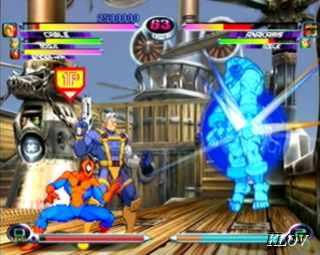
For a game that credits it's wider screen resolution, it sure does have cramped screen shots.
Story-
Unlike previous games Marvel & Capcom fighting games, the story is worth mentioning here. Cause while it is the same, bad dude something, everyone go stop bad dude and fight each other for reasons game. The bad guy was made purely for this game alone, this game also has only one ending and an actual central protagonist, whom saves the day. It feels like a story that was written and planned for another game, but ended up tagged onto this game, for reasons?
Sadly I can't seem to find any online reaction regarding the story or the unique characters added to it, this could just be people see the story as a simple means to an ends, but it be nice to know why they went for a completely original one, rather than the more generic, Stop Galactus, Stop Apocalypse, Stop Onslaught, Stop Thanos. To a point, this isn't just the first original villain to be used, this is technically the first CAPCOM villain to be used, seeing as most of them are taken out of Marvel's rouges gallery.
FOURTH GENERATION OF GAMING
1987 - 1995
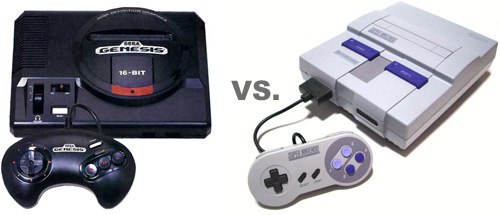
Now we make our way into the fourth generation of gaming, the clash of
the home consoles and see what these old men and founders of the gaming
community had going on at the time in terms of X-MEN.
X-MEN by Western Technologies (1993)
.jpg)
While the games are considered 'decent', people like the Angry Video Game Nerd pointed out some issues that he considered that were, in his words. 'fucked up'.
One being that when you perform the stage select code.
Down + A + C + Start, but instead of being transported to a stage select screen, you are brought into the first level. The progress normally until you reach eight panels, each panel representing a level.
Walk your character up to the panel you wish to go to, press down and the C to warp.
Another issue is that during Mojo's stage, you have to restart the game to progress to the next level once the Mojo stage is complete. An IGN Cheat page tells me that Prof.X will tell you to reset the game, but from AVGN video, this is either not clear enough, or untrue. One thing that tips me off about this being a half truth is, why would this need to be in a cheats page if the game told you clearly.
Gameplay-
For the most part the game is your typical side scrolling beat'em press one button to attack, press other button to do other attack. But to add the mutant powers aspect into the game, they had a power bar which would drain and recharge as characters use their abilities.
The only character whom this doesn't really work well with is Wolverine as his 'power' is to get his claws out, which increase his attack damage. He could also slowly increase his health, which was the first known usage of health recharge.
Visuals-

I know I'm properly asking a lot of genesis game, but it's just a personal nag on my part.
Story-While some may consider 'weak', I feel that the story in this game is a simpler and more interesting way to express multiple environments by having the danger room malfunctioning, this way you can have references to current comic book worlds, while players of the new franchise don't need to look that far into the multiple environments beyond that of quirky simulations.
X-MEN 2: Clone Wars by HeadGames (1995)
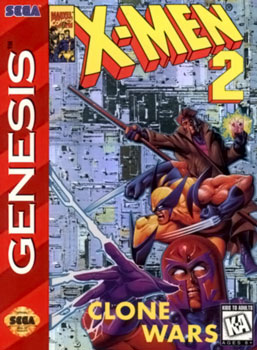
Unlike the previous X-MEN game for the Genesis, this one was based off the at the time, successful TV animated series, while it's previous was more akin to the 90's comics that were popular at the time.
It was meant to have another direct sequel called X-Women but this was canceled for unknown reasons, probably due to the popularity of the rising Fifth gen consoles.
This is also the first story driven X-MEN game where Magneto is a playable character, as well as one where he is not the primary villain.
Gameplay-
Interestingly I have to talk about a bit of the story before I can talk about the game play, as the game starts with a cold open, something rarely seen in videos of late. Before you can see the title screen, players must complete the first level with a random character, once the first level is complete.
The title and credits roll and players can choose their character and continue the story. I find this interesting as I know very little to no games that do this these days, probably for a good reason, but still interesting none the less.
Unlike the last game, there is no mutant power bar and players can use their powers whenever, but the level of health they have can affect what their powers can do as well as if they can reach power ups and health. Some mutant powers can charge up, but besides them, players still have the normal arrangement of moves and quirky abilities to help each character feel unique.
Players also only have eight lives, so you can only play the game nine times, and if you are playing with more than one person, the lives are shared amongst you.
Visuals-


Story-
The Story follows the return of the Phalanx a techno organic X-MEN alien race, whom are best know for their appearance in the animated TV series.
Much like the story in that episode, the Phalanx have come to earth and have assimilated most of the earths population, only a few surviving X-MEN and Magneto are left, the unlikeliest of foes have teamed up in order to stop the Phalanx before they assimilate everyone on earth.
X-MEN: Mutant Apocalypse by Capcom (1995)

A non fighting centered X-Men game made by Capcom that follows loosely from events in the comic books and the at the time, popular animated series by Saban Entertainment.
Despite the title Apocalypse is not the main villain in the game, he does APPEAR in the game as the third missions boss, but he is not the games title villain, instead that falls to Magneto.
Gameplay -
The game is a side scrolling action, plat former that follows five playable X-MEN characters as they try complete missions assigned to them by Prof.X, to complete the game, you must complete all your missions, but after every mission you can change characters if you wish as each character only has two lives. But if just ONE of these characters loose all their lives, it's a complete game over.
To gain more lives players must collect three blue square with an X in them, while to regain health they must collect a red canister with an X on it.
As for mutant abilities, unlike previous X-MEN game there is no one button, instead the players need to perform street fighter like combos which activate certain moves, sadly some of the game play elements are tailored to specific moves and if you can't pull them off quick enough, you die.
Surprisingly fan favorite Wolverine is the weakest mutant, he doesn't have his famous healing factor in this game, instead he just preforms specific moves and thus is rendered just a melee character. This could be an insensitive to make him the hardest to play as.
Visuals-For the most part the visuals aren't bad, each character is recognizable, the environments are diverse as well as the range of enemies and bosses. The only 'issue' Is Psylock as her visual appearance, they went too far with body proportion and she looks very much akin to the She-Hulk.
Story-The story is fairly simple, Magneto has kidnapped mutants and placed them on Genosha and it's up to the X-MEN to save the mutants and stop him. The only problem is there is no reason to call it Mutant Apocalypse or have Apocalypse feature on the cover
Retro Monday - Review
FIFTH GENERATION OF GAMING
1993 - 2003
1993 - 2003
X-MEN: Mutant Academy by Paradox Development (2000)
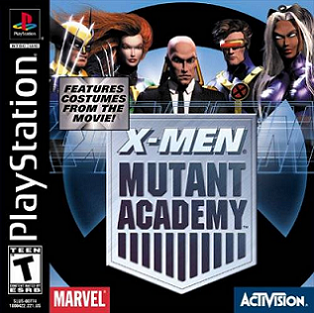
Like MANY X-men games before it, X-Men: Mutant Academy is a fighting gaming. It tied itself with the at the time just popular X-MEN live action film to help booster sales, by promoting that characters could wear costumes that their counter parts had warn in the movie.
two versions of the game were released one for Playsation and the other for Game Boy Colour, the game boy colour variation got additional characters such as Pyro and Apocalypse, but it also lacked Beast and Phoniex.
Gameplay-
For the most part the game play is very akin to street fighter, with two buttons performing heavy attacks and the others performing light attacks. With a special bar that allows you to perform special abilities, when a certain chain of commands are entered.
As for the Game Boy Colour version, the controls are very simplified with only the use of an A and B buttons, plus a directional pad. The special bar still exists, but this time, in the form of a rage bar.
Visuals-

For the most part the visuals aren't bad for a playstation game, but they also aren't very impressive either, some what dense models with high res textures. The most important that all characters are easily to tell the difference between and no one blend sin with one another.

As for it's Game Boy Colour counterpart, while the games graphics are graphically more simpler, they still work in terms, but the graphics are still bad for Game Boy Colour that were out at the time.
X-MEN: Mutant Wars by Hal Corp/AVIT (2000)

X-MEN Mutant Wars is a side scrolling action beat'em up game for the Game Boy Colour and published by Activision. Like most games released in 2000, it was released in time for the popularity of the just then released X-MEN movie.
Gameplay-Like a lot of X-MEN games, the mechanics focus around single player team work and mutant powers as been a heavy focus in the game play.
The game goes for a very megaman approach to this by having the player being able to choose and swap out between characters and their unique abilities and that using certain characters in certain stages and moments being required in the game. But as you use the characters abilities, their mutant ability gauge will start to decline, which means the players will have to swap the characters out.
An alternative game mode pitches the players against bosses from the game, but if their mutant power bar drops completely in this game mode, they can not use the character anymore.
Visuals-
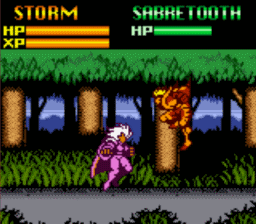
Visually the game is not that visually impressive for a Game Boy colour game of that generation, while the characters do stand out from the background and even recoloured so known characters to help them stand out more, it does make the game feel a bit old and dated, nothing very revolutionary wise in terms of visuals for this game.
X-MEN: Mutant Academy 2 by Paradox Development (2001)

Surprisingly this game received much higher praise and was actually awarded the position of 43rd best fighting game of all time in 2011. But still felt it needed to milk of the success of the movie by having unlockable concept art from the film.
Surprisingly you can play as Charles Xavier in this game.
Gameplay-
Unlike the previous game, X-Men: Mutant Academy 2 provides the players with multiple game play choices and options as well as a bag full of unlockable content, such as characters, levels, costumes, scenarios and secrets.
Most of the game modes revolve around the games simple one on one fighting system that is based similarly around Mortal Kombat 4's fighting system. These game modes are...
Academy training, where with the known knowledge of practicing moves, you can also unlock costumes for characters.
Arcade, which is the more or less story mode of the game, where you can unlock endings for every characters once you complete them.
Versus where you play against other people, which can unlock you a secret swimming pool themed level, which also puts you characters in swimming costumes.
Survival makes the player face off against waves of enemies, with no stops or chance to regain health, just constant combat, the higher the score, the higher up on the leader board you go.
Visuals-
While the graphics are an improvement they are not that much different from the previous game and style is nothing to write home about, not really a dramatic change from the last game.
SIXTH GENERATION OF GAMING
1998-2013
1998-2013

Now we enter the era of the sixth generation. The bygone era of pointed edged character models are gone, graphics are sleeker and more rounded than before, it is the era that introduce more unique style as well as the start of photo realistic graphics.
X-MEN: Reign Of Apocalypse by Digital Eclipse Software (2001)

Gameplay-
Like stated, the game plays more or less exactly like the originally side scrolling beat'em up by Konami, with only less characters and a lack of a multiplayer feature.
Players are given hard and light attacks, which they must press frantically within each other to perform combos, otherwise they will not register on the game. The players also have to perform combos to perform mutant powers. You can also pick up power ups for life and mutant power.
With the completion of every level you can increase the stats of your characters.
Visuals-
While the character sprites themselves are brightly coloured and very iconic, enemies are mostly colour palate swaps and very generic 'robot' enemies.
The backgrounds in the game, while very varied, are dramatically different, opting more for a grainy comic book almost slightly realistic look, that did not match too when with the rest of the game, but still served it's purpose in allowing players to know where they were.
X-MEN: Next Dimension by Paradox Development (2002)

Much like X-Men Academy, Next Dimension is a fighting which takes story ques from the comic book story Operation: Zero Tolerance.
The Game also takes ques for Dead Or Alive 3, where you are able to push opponents out of the ring and into another section of the player. It also has fully realised 3D environments , something that was becoming more common placed in fighting games.
Gameplay-
Like most fighting games there is a light and hard punch/kick for all the characters, pressing both kicks or punch buttons at the same time will perform super attacks, while pressing buttons in sequence will perform multi-hit combos much like Darkstalkers chain attacks. The Game also features many other forms of combos besides chain combos such as air juggles and air launches.
Players can also block and perform counters, but unlike most counter systems in game, the counter in Next Dimension is a button onto it self, which can be changed upon direction.
Unlike most story modes before it, you do not play a story mode for a specific character in Next Dimension, instead you play as different characters at different moments of the story and there is only one story for it.
The story mode even includes multiple different possible enemies depending upon on who wins and who is defeated in the course of story mode.
While in other games modes, you get to select your characters and fight against you opponents.
Visual-

The game has obviously takes visuals cues from both the recent movies, the animated series and the comic books. Having a wide style range in it's characters.
Taking full advantage of the sixth gen consoles, this game is major graphical improvement over the last games in the so called 'academy series'. Having much better textures and models as well we a lot more rounded levels. It also takes advantage of all the 3D tech to put references to other X-men law.
Such as in the Egyptian temple level, you can see Apocalypse rising from his tomb in the background.
X-MEN: Legends by Raven Software (2004)
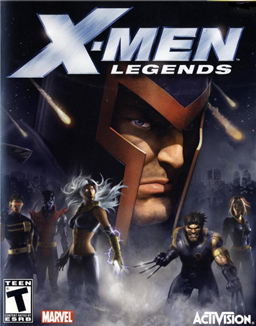
Unlike most X-MEN games that had come before it, X-MEN Legends is an up to four player Co-Op Action role playing game. Which allows people to use the team affect to full.
This game received many positive reviews from critics and gamers alike, praising the game for its visual styles, but criticized the AI of other characters and the voice acting to be average at best. They recommended the game be played on Co-OP.
Surprisingly the N-Gage port version of the game was also praised, saying the graphics were strong and the fact that voice acting was presence at all in this port of the game.
Game Play-
In the game players can pick and choose up to four X-MEN characters and switch at any point during the game, they are also able to unlock more characters as the game progresses.
Like most RPGS players can level up and increase their abilities as well as gain equipment that can increase the base stats of the player, surprisingly the game features a combo feature where players can combine their attacks to perform combos. They can also perform Super combos using "Xtreme power" which can be unlocked at level 15.
The X-mansion serves as the hub for the game, where one player must control the character Alison Crestmere Also known as Magma. And must use her to explore the mansion, where she can look at computer logs, character files, art, cut scenes and even do trivia quiz to earn experience points. Players can also access the danger room to train and practice moves. Players can buy equipment from Forge and get healed by the Morlock Healer.
Visuals-
The game was praised for it's visuals and for at the time, they were pretty impressive. Lacking enough detail during gameplay so you wouldn't loose sight of your character in a skirmish and being high detailed that it seemed modern. Which is why a cel-shaded look was the right choice as it also complimented the comic book origin the game spawned from.
X-MEN: Legends 2: Rise Of Apocalypse by Raven Software (2005)
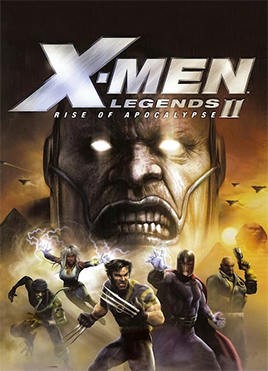
X-MEN: Legeneds 2: Rise Of Apocalypse is a 'some what' direct sequel to X-MEN: Legends, unlike the last game, Magneto and the brotherhood of mutants are not the main antagonists, this time they are teamed up with the X-MEN in taking down the new villain, Apocalypse, who is attempting to thin out the world and only leave the strongest to live in his ideal world.
The game was split on the opinions of critics, some claimed it was success compared to the original the grounds of improved mutant abilities, greater characters roster and the addition of an online multilayer. While others felt the voice acting was still unimproved cared to the last game and that the game was too overly repetitive to be enjoyed.
Gameplay-
The gameplay remains generally unchanged from the previous game, only additions to previous mechanics have been added, such as, now when you perform a combo attack, instead of just two characters, you can now perform a combo with up to four characters. With the addition of online multilayer, players both online and offline can join and drop in the middle of the session without having to worry about no one controlling their character.
They can also gain new mutant abilities and assign certain abilities to certain buttons on the controller. The game can also be replayed in a harder difficulty after completion and characters will hold onto gear and powers they had in the origination play through.
They've even changed the hub, in the last game, the Hub the X-Mansion, this time, it's a location that represents the mission you are about to partake on, like a base camp and can always be accessed in between missions. Much like last time you can access character bios, loading screen art, Mutant powers as well as a trivia quiz to earn extra experience points.
Visuals-
The visual game play goes greatly unchanged from the previous game only the minor tweaks here and there. However the cut scenes go a major overhaul as they were outsourced by the company, the cut-scenes were produced by a company known for making animated videos for film, TV and games, they are called Blur Studios.
X-MEN: The Official Game by Z-Axis Ltd, Beenox, Amaze Entertainment, Wayforward Technologies, Hypnos Entertainment inc (2006)
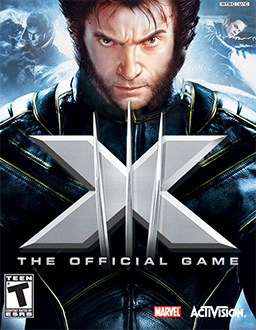
Unlike previous X-MEN games that used the success of the popular comic book story, animated cartoon or movie to help launch it's success. This game is actually a tie in with the Second X-MEN movie, supposedly taking place surely after the film's canon story. The Game's story is written by two writers, one being Zak Penn writer of a lot of comic book movie films such as the X-MEN movies, Elektra, The Fantastic Four and even the Avengers with Josh Whedon, while the other half was written by comic book veterinarian writer Chris Claremont who wrote the Dark Phoniex Saga as well as helped established Nightcrawler, Colossus, Banshee, Storm And Wolverine as current Marvel X-MEN characters.
The game received mixed reviews from critics, many viewed it's simple minded AI and criticized the Xbox 360 version looks exactly like the previous generation version of the game.
Gameplay-
Through the course of the game, players must play as Wolverine, Iceman and Nightcrawler, each with their unique game types to complete the game.
When playing as Wolverine games, players will fight hoards of enemies armed with various weapons as the progress through the level. His healing factor is worked into the game as a buffer which is shown as a yellow gauge on his health bar, as he is attacked, the gauge will deplete and when it empties any damage done to him will be permanent in health taken off from him.
As for Nightcrawlers, his section of game play focuses on a more platforming element, that uses his unique teleporting power. When in the shadows, Nightcrawler will become invisible to enemies, he can also heal by holding down a button, but unlike Wolverine, he has no buffer and he can perform combo attacks on enemies.
And finally, Iceman's sections of game can be described as a flight-sim. The player controls Iceman as he rides around on a streak of ice and can edit the direction with the control stick, you can also fire projectiles at enemies and targets. He also has an icebeam attack that cools down fire and a Ice shield that can cancel out damage of oncoming attacks.
Visuals-Being a movie tie in game, that had to go for as photo-realstic as they could, even using photo scans of the actors for the characters. The downside is that many of the characters who feature in the game aren't in the film, so they have to bring in people who look like the comic book characters, but also mold them to have that movie style to them, The cutscnes are done like a comic book panel, which is homage to the films source material, but they also go for a heavily painted, semi-realistic movie poster look to capture the likeness of the actors in the film, so they feel a bit disjointed at times.
SEVENTH GENERATION OF GAMING
2005-Ongoing
2005-Ongoing

The current generation of consoles has arrived, beautiful graphics, the addition of online multiplayer, social media, online shopping and downloadable content.
X-MEN: Destiny by Silicon Knights (2011)

No comments:
Post a Comment